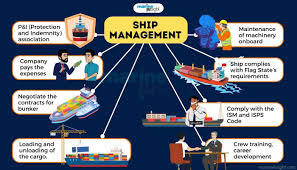





Ship Management Services refers to the professional services provided to manage, operate, and maintain commercial ships. These services are typically offered by specialized companies that oversee the technical, operational, and regulatory aspects of ship operations. The goal is to ensure that ships operate safely, efficiently, and in compliance with international and local maritime regulations.
Maintenance and Repairs: Regular inspections and maintenance of the vessel's machinery, equipment, and systems to ensure optimal performance.
Technical Support: Assistance with troubleshooting and repairing issues with the ship's equipment, engines, and hull.
Compliance: Ensuring that the ship adheres to all international maritime regulations, including those from the International Maritime Organization (IMO) and other regulatory bodies.
Crew Recruitment: Recruiting qualified and trained crew members for different roles, such as captains, officers, and engineers.
Training and Certification: Ensuring the crew is properly trained and certified in accordance with international standards (e.g., STCW - Standards of Training, Certification, and Watchkeeping for Seafarers).
Payroll and Welfare: Handling crew salaries, benefits, and general welfare, both onboard and on shore.
Voyage Planning: Organizing the ship’s voyages, including routes, ports of call, cargo, and delivery schedules.
Chartering and Freight Management: Securing contracts for the ship’s cargo and determining freight rates.
Port Services: Arranging port entry, customs, and logistics.
Safety Protocols: Establishing and enforcing safety measures onboard, including emergency drills, equipment maintenance, and risk assessments.
Environmental Compliance: Managing compliance with environmental laws and regulations, like the International Convention for the Prevention of Pollution from Ships (MARPOL).
Budgeting and Cost Control: Managing operational expenses like fuel, repairs, and crew wages.
Financial Reporting: Providing regular financial reports and ensuring cost-effectiveness in ship operations.
Insurance Management: Managing the ship's insurance coverage for hull, machinery, cargo, and liability.
Legal Services: Addressing legal issues related to shipping contracts, disputes, and claims.
Ensuring that ships undergo regular inspections (e.g., by classification societies) and maintain valid certifications like the International Ship Security Certificate (ISSC), Safety Management Certificate (SMC), and others.