





logo

Biblical Sites

  • No Rating
  • (0 Reviews)
  • 0 User Enrolled

Biblical Sites

These tantalizing archaeological finds may—or may not—offer material evidence of ancient locations, characters and stories written about in the Bible.

  • No Rating
  • (0 Reviews)
  • 0 User Enrolled
  • Free
10-Day Money-Back Guarantee


Course Content

3 sections • 10 lectures • 01h 40m total length
The Important Role of Megiddo in the End Times

Megiddo is a city built for war because of its strategic location in the ancient world. From the first physical battle recorded in the fifteenth century BC to spiritual debates of today surrounding Armageddon, war is a constant theme. Join Dr. Jack Beck at Megiddo as he provides fascinating stories about the various battles that have been fought in this much-talked-about location. Although there are varying opinions on the book of Revelation and how the world will eventually end, Jack reminds us that God has the victory and He makes all things new (Revelation 21:5).

preview 10min
Qumran

Qumran and the Dead Sea Scrolls in Israel: Amazing Discoveries that Prove the Bible Is True!

See a high-quality video about Qumran, the Essenes, and the amazing discoveries of the Dead Sea Scrolls. Drone aerial footage and more! Location 1. Qumran is located on the northwest side of the Dead Sea on Hwy. 90, and about 13 miles (21 km.) east of Jerusalem. 2. It’s in the Judean Wilderness where it’s barren and hot. 3. It’s located 1200 feet (366 m.) below sea level. 4. Its water source comes from the Judean Mountains to the west of the community via an aqueduct. 5. There are many caves in the area. 6. It was at Qumran that one of the most important discoveries in the history of biblical archaeology took place in around 1947. Historical Background 1. It’s believed the ancient settlement of Qumran was established by a Jewish group called the Essenes. 2. They lived here from about 200 BC to around 68 AD. 3. There were around 200 people who inhabited Qumran during its history. 4. The ruins were excavated in the 1950s by a French archaeological team. 5. The Essenes were a spiritually devoted group of folks who left Jerusalem due to their belief that the priesthood had become corrupted beyond repair and separated themselves to study the Bible, copy it, and seek the Lord in the desert. 6. They were a strict Torah observant, Messianic, apocalyptic, new covenant Jewish sect. They were led by a priest they called the "Teacher of Righteousness.” They were highly educated and very familiar with writing and study. 7. The future monastery lifestyle followed similar patterns of the Essene community. 8. Josephus wrote that the men of Qumran rejected marriage, and instead, cared for the needy and neglected children of others. However, later discoveries found skeletons of women, so it’s believed women were part of the community as well. 9. The Dead Sea Scrolls were most likely written by the Essenes during the period from about 200 BC to 68 AD. The Essenes are mentioned by Josephus and other secular sources, but not in the New Testament. 10. When the Essenes saw the nation of Israel falling to the Romans in around 68 AD, they hid their manuscripts in caves around Qumran. These manuscripts are what we refer to as the Dead Sea Scrolls.

preview 10min
Tel Hazor Overview: History, Conquest, Israelites, Joshua 11, Judges 4, Canaanites, Sea of Galilee

The victory over Hazor by Joshua and the Israelites is probably one of the most overlooked miracles in the Bible. To support our work in producing videos about the Holy Land: https://www.paypal.com/donate?hosted_... When we realize how powerful Hazor was and how Jabin, the King of Hazor, gathered countless armies against the Israelites, we see that it was only God who could have given them the victory. Location 1. Hazor is located about 10 miles (16 km.) due north of the Sea of Galilee and just to the east of Hwy. 90. 2. It was on one of the most important travel routes called the “Via Maris,” which linked Africa and Egypt with Syria and Asia. 3. It was the largest and most strategic city in northern Galilee due to its size and location. Historical Background 1. Hazor was one of the most important cities of the Canaanites and was the head of all the northern kingdoms (Josh. 11:10).  2. It was 10 times the size of Jerusalem and totaled 200 acres (81 hectares, 200 football fields) in size. 3. The upper part of the tel is around 30 acres (12 hectares), and the lower part is around 170 acres (69 hectares). 4. What we see today of Hazor is 1/8 the size of what it once was.  5. To the north lies most of the city which is now a farm field. 6. It’s the largest tel in Israel. 7. It’s also believed to have been the largest city in ancient Canaan. 8. It was one of three major cities of defense in Israel (Gezer, to the south, Megiddo, in the middle of the country, and Hazor, in the north). All three cities were on the Via Maris. 9. Hazor rivaled Nineveh in size and importance. 10. Hazor is mentioned 19 times in the Bible. Places of Interest 1. Israelite City Ruins 2. Israelite Walls 3. Lower City 4. Temple Tombs 5. Northern Walls 6. Canaanite Temple 7. Solomon’s Walls and Gate (archaeologists have uncovered a six-chambered gate at Hazor, which is nearly identical in size and design to gates at Megiddo and Gezer). 8. Canaanite Palace/Temple 9. Ash layer in the Canaanite Palace/Temple 10. Canaanite Altar 11. Water System (a century after Solomon’s time, the Israelites built a massive shaft 131 ft. (40 m.) deep into the tel, reaching the water table below). 12. Israelite Fortress/Tower 13. Rooms & Buildings 14. Canaanite Passage between the upper and lower cities. Hazor in the Bible The victory over Hazor by Joshua and the Israelites is probably one of the most overlooked miracles in the Bible. When we realize how powerful Hazor was and how Jabin, the King of Hazor, gathered countless armies against the Israelites, we see that it was only God who could have given them the victory.​ 1. When Jabin, King of Hazor heard that Joshua and the Israelites had been on a conquering rampage throughout all the southern part of the land, he gathered a host of kings in the northern part of the land, which was so large that they were like the sand on the seashore, in order to unite and fight against the Israelites (Joshua 11:1–5). 2. All the unified kings and soldiers believed that with their countless armies and gods, Israel would be no match for them. 3. God told Joshua and the Israelites not to be afraid because He would be with them and deliver all these kings into their hands (Joshua 11:6–9). 4. After defeating all the armies, Joshua conquered Hazor and burned it with fire (Joshua 11:10–13). 5. Hazor was later retaken and rebuilt by the Canaanites. God used the Canaanites to punish Israel for their disobedience to Him (Judges 4:1–3). 6. God used Deborah and Barak to deliver the Israelites after they repented of their sins and cried out to Him for help (Joshua 4:14–16). 7. Hazor later came under the control of Israel during the period of King David and Solomon, and Solomon rebuilt and fortified Hazor, along with Megiddo and Gezer (1 Kings 9:15). 8. As a result of Israel’s disobedience to God, Hazor was destroyed by Assyria in 722 BC, and the northern 10 tribes of Israel were deported (2 Kings 15:29). 9. Jeremiah prophesied against Hazor due to the Israelites disobedience just before the Babylonian conquest and deportation of the Israelites in around 586 BC. (Jeremiah 49:33). Faith Lesson from Hazor 1. When the Israelites obeyed God, He blessed them and made them victorious over countless kings and multitudes of soldiers. 2. When they disobeyed God, He caused them to become weak and defeated. 3. The same lesson from the Old Testament applies to us today (Rom. 15:4). When we are obedient and faithful to God, we live victoriously and receive His blessings. However, when we disobey Him, we become weak and defeated. 4. What kind of lives are we living today, and are we victorious or defeated?

preview 10min
Jordan’s Ruins of Mukawer

Jordan’s Ruins of Mukawer: Site of John the Baptist's Imprisonment and Death

preview 10min
Jerusalem

Jerusalem Old City & Bethlehem Walking Tour - Visiting the Holy Land

preview 10min
Tel Beersheba

Tel Beersheba Overview Tour: Biblical Place Where Abraham, Isaac, and Jacob Lived!

preview 10min
Bethsaida

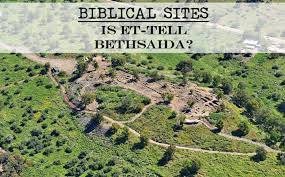
The True Location Of Bethsaida

preview 10min
Jordan's Mount Nebo

Jordan's Mount Nebo: Where God Showed Moses the Promised Land

preview 10min
Petra, Jordan | Civilisations

Petra, Jordan | Civilisations

preview 10min
Sidon and Tyre

The History of Lebanon, The Phoenician cities of Sidon and Tyre

preview 10min

Requirements

  • Bible

Description


Tel Megiddo

Current Location: Israel

Megiddo is better known to some by its Greek name of Armageddon, which some Christians believe will be the site of the end-times battle prophesied in the Book of Revelation. Archaeologists have uncovered an astounding 26 layers of human occupation at this site, which is located about 30 km southeast of Haifa, Israel. A leading Canaanite city during the Bronze Age, it later became an important royal city in the Kingdom of Israel, according to the Hebrew Bible. 


Qumran

Current Location: Israel's West Bank

This ancient settlement, located on the northwest shores of the Dead Sea, gained international fame in the late 1940s, when Bedouin shepherds stumbled into nearby caves and discovered the first of the ancient Hebrew and Aramaic texts known as the Dead Sea Scrolls, which contain biblical text and other ancient writings. Subsequent excavations revealed the ruins of buildings and an extensive aqueduct system. Some scholars believe Qumran was home to the Essenes, an isolationist Jewish sect often credited with authorship of the Dead Sea Scrolls. 


Current Location: Israel (Galilee)

At some 200 acres, this site in Upper Galilee (now a national park) is the largest of Israel’s “tels,” the artificial mounds that have formed over centuries of human settlement, as older buildings crumble and new ones are built. According to the Old Testament, Hazor was the site of one of Joshua’s key victories in his conquest of Canaan after Moses’ death; he supposedly burned the city to the ground, clearing the way for Israelite settlement. Excavations are ongoing, and though some evidence of burned materials and structures have surfaced, archaeologists are still debating whether the biblical battle actually took place.

READ MORE: The Bible Says Jesus Was Real. What Other Proof Exists?


Machaerus

Current Location: Jordan

This ancient desert fortress, located just over 30 km to the southwest of Madaba, Jordan, sits atop a hill overlooking the Dead Sea. After its destruction by Roman troops, King Herod the Great rebuilt Machaerus and used it as a military base. The Bible (and Jewish historian Flavius Josephus) identified the palace-fortress as the site where John the Baptist was imprisoned and executed on the orders of Herod the Great’s son Herod Antipas. 

READ MOREWhere is the Head of John the Baptist?


Old City of Jerusalem

Current Location: Israel (also claimed by Palestine)

According to Jewish tradition, the Temple Mount (which now lies within a walled compound inside the Old City) was where God gathered the dust to create the first human, Adam, and where King David’s son, Solomon, built the first temple circa 1000 B.C. (later torn down by the Babylonians). Muslims also worship at the site, now home to the Dome of the Rock, an Islamic shrine, and the al-Aqsa Mosque. These competing claims have led this to become one of the most contested spots in the world. The Old City contains other key religious sites, including the Church of the Holy Sepulchre, the site of Jesus’ crucifixion and his (empty) tomb, and the Western Wall, a remnant of the Second Temple (built by King Herod in the first century B.C.) that is the holiest site Jews can go to pray.

READ MOREHistory of Jerusalem


The Bible Says Jesus Was Real. What Other Proof Exists?


Tel Beersheba

Current Location: Israel (Negev desert) 

Located in the Negev desert in southern Israel, this site is thought to be the remains of the biblical town of Beersheba; it lies a few miles east of the modern city by that name. According to the Old Testament, the Hebrew patriarch Abraham negotiated a deal with the Philistine king Abimelech over a well here, and planted a tamarisk tree. The site’s well-preserved water system of cisterns dates to the Iron Age.


Mount Nebo

Current Location: Jordan

According to the Old Testament, Moses lived his final days here, and climbed to the top to look out over the Promised Land before he died. Some believe Mount Nebo was also where the Hebrew prophet and leader was buried. A pilgrimage site since the fourth century, it was home to a church built around that time, the ruins of which were discovered in the 1930s. Mosaics created in the sixth century by Byzantine-era monks are still on view, as well as stunning views of the Holy Land and the Jordan River valley from its peak.

READ MOREWhere is the Head of John the Baptist?


Petra

Current Location: Jordan

This ancient city, carved into the red rock cliffs of Jebel al-Madhbah, near the Dead Sea in southern Jordan, was known as “Sela” in the Bible. Scholars believe Petra was likely built circa 312 B.C. by the Nabateans, a mysterious ancient Arabian society that founded an independent kingdom with its capital here. The world-famous ruins still yield new discoveries, such as the massive, mysterious structure found near its center in 2016, which scientists spotted using Google Earth, satellite imagery and drones.


El-Araj

Current Location: Israel (Galilee)

Recent excavations of Roman-era ruins at this site located at the delta of the River Jordan, on the northern shore of the Sea of Galilee, suggest it may be the ancient Jewish fishing village of Bethsaida, later the Roman city of Julias. Frequently mentioned in the Gospels as the birthplace of three of Jesus’ apostles—Peter, Andrew and Philip—the village also saw Jesus himself perform several memorable miracles. Though another group of scholars claims et-Tell, on the Jordan River's east bank, is actually Bethsaida, archaeologists at el-Araj argue that the site’s location makes it the strongest candidate for the biblical fishing village.

READ MOREAncient Middle East


Sidon (Saida)

Current Location: Lebanon

 Along with nearby Tyre, this ancient port city (locally known as Saida) was important in both the Old and New Testaments for its association with the Canaanites, the ancient inhabitants of land west of the River Jordan in modern-day Israel, Palestine, Lebanon, Syria and Jordan. When Jesus visited the region, according to the New Testament, many came out to hear him preach. The city is home to the Temple of Eshmun (the Phoenician god of healing), a site of great archaeological importance; it suffered extensive damage in the Lebanese civil war, but has been partially restored.

 

Recently Added Courses

blog
Last Updated 13th June 2025
  • 6
  • Free
blog
Last Updated 13th June 2025
  • 0
  • Free
blog
Last Updated 28th May 2025
  • 2
  • Free
blog
Last Updated 28th May 2025
  • 0
  • 19.00₹
  • 100.00₹

About the Instructor

instructor
About the Instructor

Creative Knowledge From Various Good Teachers From Various Locations. Knowledge is Free Always